

Imagine stopping a repair because the last electrical connector was used yesterday.
Or realizing someone ordered another box of zip ties when five unopened boxes were already sitting on another shelf.
These inventory issues happen every day in maintenance shops, fleet operations, manufacturing facilities, municipalities, and service departments. Too much inventory ties up cash, while too little inventory delays repairs and frustrates technicians.
Vendor Managed Inventory (VMI) solves this challenge by allowing a trusted supplier to monitor, replenish, and optimize your inventory, so your team always has the products they need, without spending valuable time managing stock.
In this guide, you'll learn:
- What Vendor Managed Inventory is
- How the process works
- Benefits for MRO operations
- Common misconceptions
- Whether VMI is right for your business
What is Vendor Managed Inventory?
If you've ever had a technician stop work because an essential part wasn't available, or discovered shelves filled with products that haven't been used in months, you've experienced the challenges of inventory management. Vendor Managed Inventory (VMI) is designed to solve those problems by shifting the responsibility of monitoring and replenishing inventory from the customer to a trusted supplier.
Vendor Managed Inventory (VMI) is an inventory management system in which a supplier monitors inventory levels at a customer's location and replenishes products based on agreed-upon minimum and maximum stock levels. Rather than waiting for someone on your team to notice low inventory and place an order, the supplier proactively ensures the right products are available when they're needed.
In a traditional inventory system, employees are responsible for checking shelves, counting inventory, identifying products that need to be reordered, creating purchase orders, and tracking deliveries. These tasks consume valuable time and can easily be overlooked during busy periods, leading to stockouts or excess inventory.
With a Vendor Managed Inventory program, many of these routine inventory responsibilities are handled by the supplier. Through scheduled inventory reviews, usage monitoring, and planned replenishment, the supplier helps maintain appropriate inventory levels while reducing the administrative burden on your team.
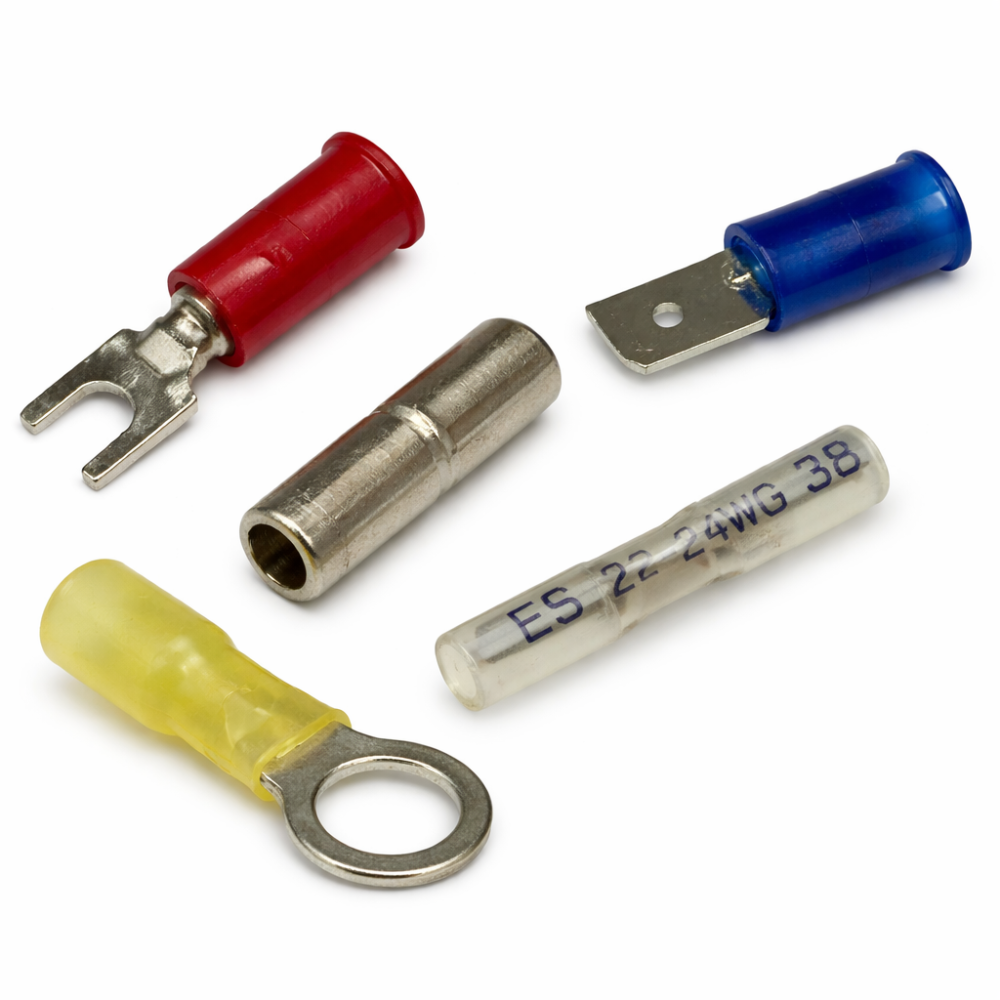
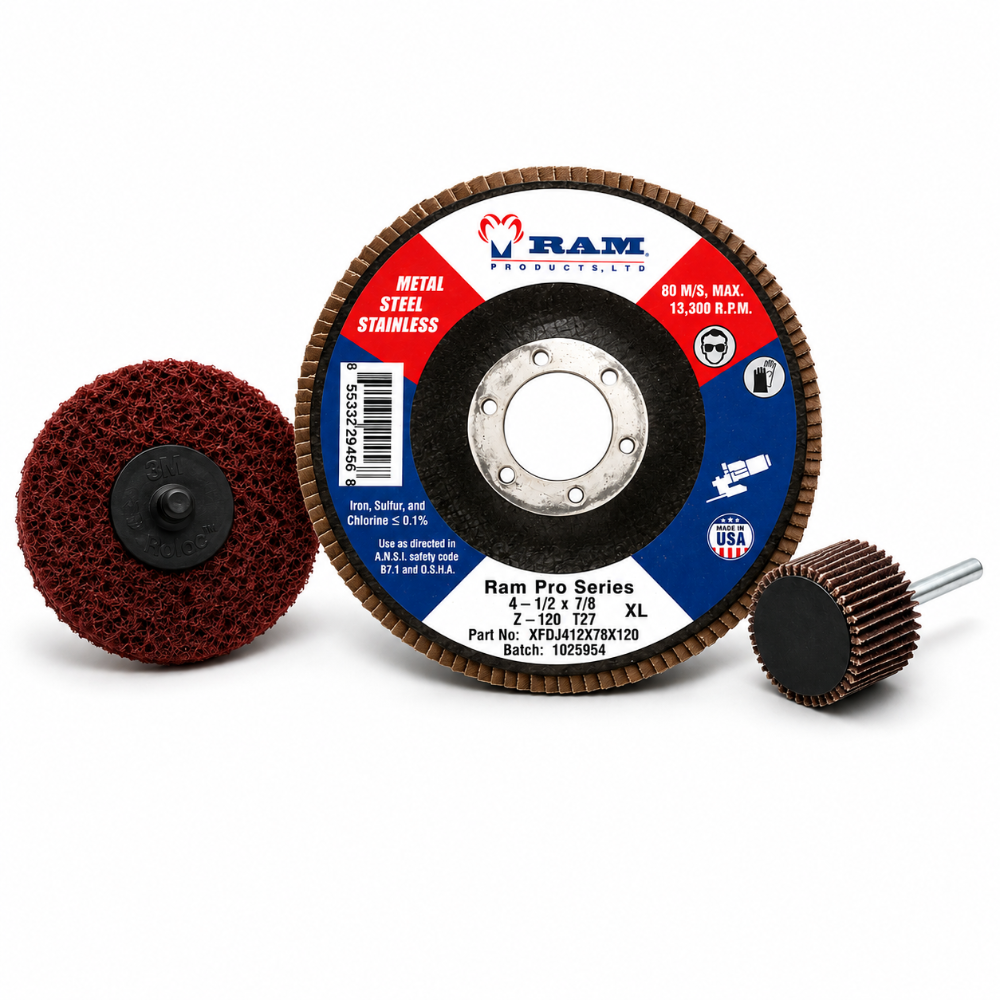
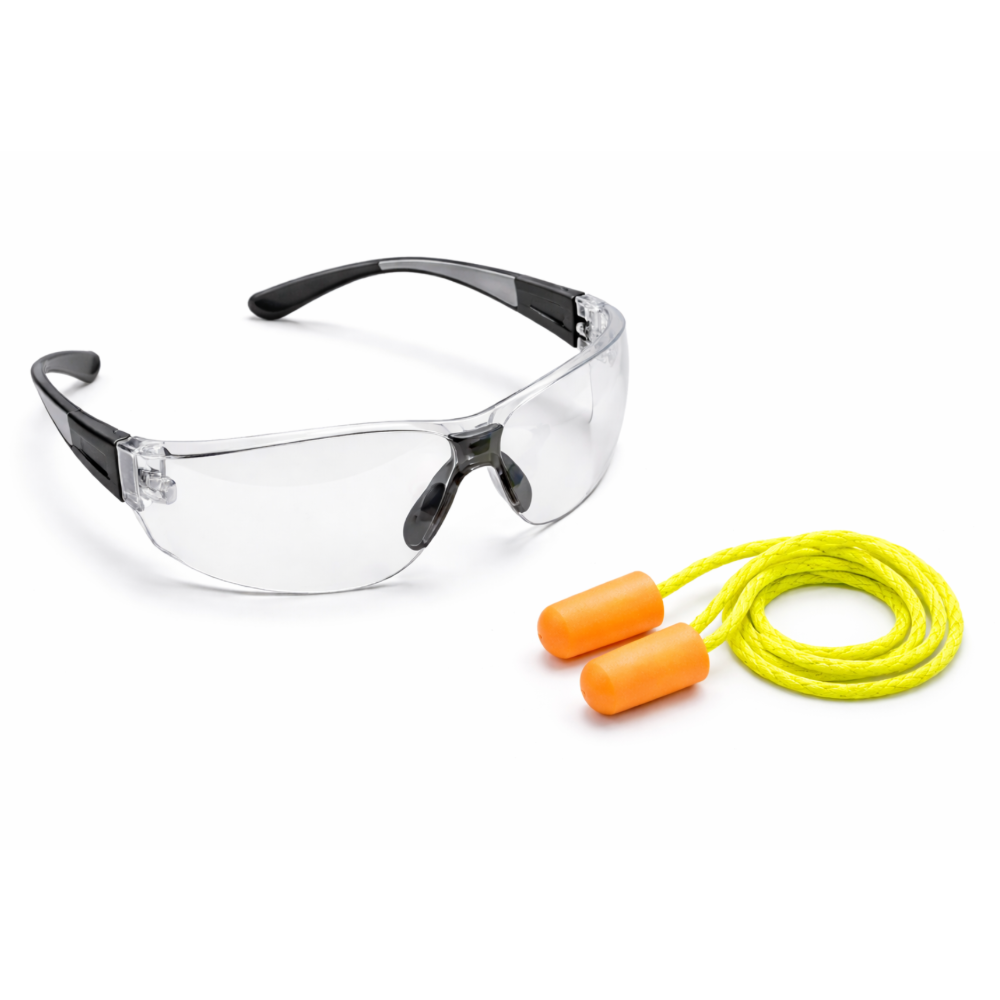
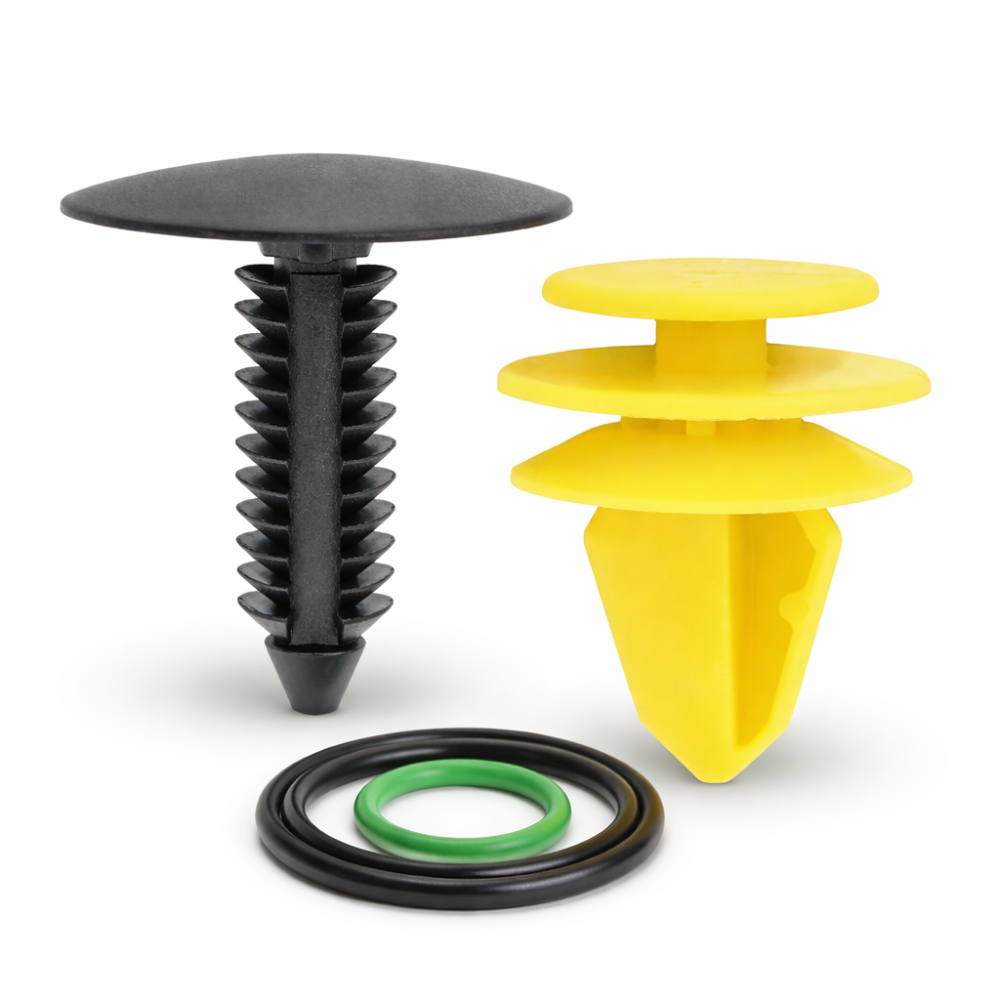
| Vendor Managed Inventory is commonly used to manage frequently consumed MRO products, including: | |
|  |
|  |
|  |
|  |
|  |
|  |
|  |
| 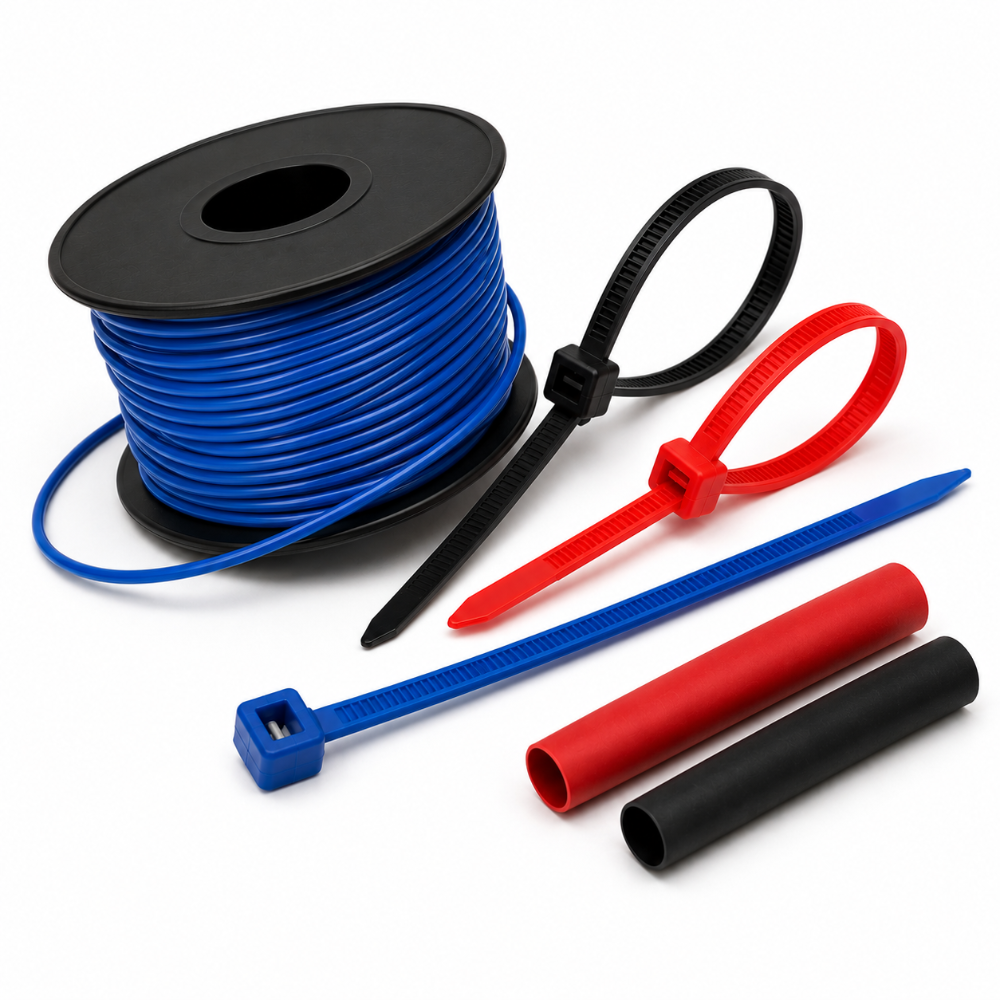 |
Because these products are used every day, maintaining consistent inventory levels helps reduce downtime, improve productivity, and ensure technicians have the materials they need to keep operations running efficiently.
How Vendor Managed Inventory Works
While every Vendor Managed Inventory (VMI) program is tailored to the customer's specific needs, most follow a similar process. The goal is to ensure critical inventory is available when it's needed while reducing excess stock and minimizing the time your team spends managing inventory.
Here's what a typical Vendor Managed Inventory program looks like:
Inventory Assessment
Every successful VMI program starts with understanding your operation. Before inventory levels are established, the supplier evaluates your current inventory practices, purchasing patterns, and operational needs.
During this assessment, they typically review:
|  |
This information helps create a customized inventory strategy rather than relying on a one-size-fits-all approach. For example, a fleet maintenance shop may use electrical connectors, cable ties, and heat shrink tubing daily, while a manufacturing facility may consume large quantities of abrasives, fasteners, and industrial chemicals. Understanding these differences allows the inventory program to be tailored to each customer's operation.
Establish Minimum and Maximum Inventory Levels
Once inventory usage has been evaluated, the supplier works with your team to establish minimum and maximum stock levels for each product.
The minimum level represents the point at which inventory should be replenished before a shortage occurs. The maximum level prevents unnecessary overstocking and helps keep inventory investment under control.
For example:
| Product | Minimum Inventory | Maximum Inventory |
Electrical Connectors | 3 Bags | 8 Bags |
| Cable Ties | 10 Bags | 20 Bags |
| Safety Glasses | 2 Cases | 6 Cases |
These inventory levels aren't permanent. As product usage changes due to seasonal demand, new projects, or changes in production, minimum and maximum quantities can be adjusted to better reflect your actual needs.
Routine Inventory Lists
Rather than waiting for someone to place an order, the supplier conducts scheduled inventory reviews to monitor stock levels and replenish products as needed.
Depending on your operation and product usage, these visits may occur:
| 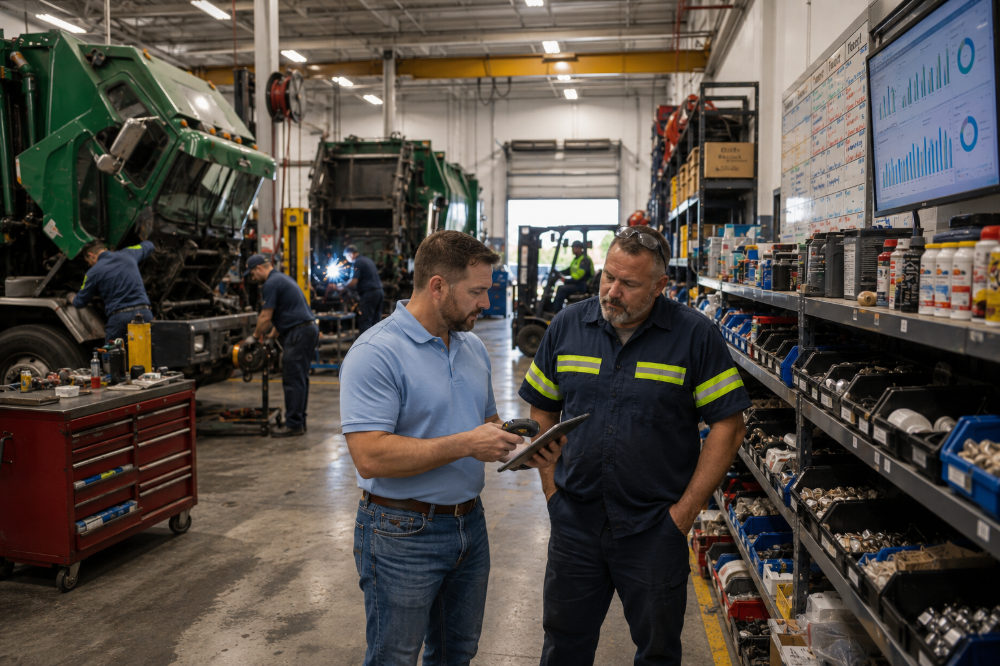 |
During each visit, the supplier checks inventory levels, verifies that products remain organized, identifies items approaching their minimum quantities, and notes any changes in usage patterns. This proactive approach helps prevent stockouts before they disrupt operations.
Inventory Replenishment
After reviewing inventory, the supplier replenishes products that have fallen below their established minimum levels. Instead of ordering based on estimates or emergency requests, replenishment is driven by actual inventory usage.
This means your technicians are more likely to have the supplies they need when they need them—without tying up valuable cash in excessive inventory. It also reduces last-minute purchasing, expedited shipping costs, and unexpected downtime caused by missing materials.

Reporting and Continuous Improvement
A Vendor Managed Inventory program doesn't end once products are restocked. Ongoing reporting provides valuable insight into how your inventory is being used and where improvements can be made.
Depending on the program, reporting may include:
- Inventory usage trends
- Product consumption by category
- Slow-moving or obsolete inventory
- Opportunities to standardize products
- Recommendations for reducing inventory costs
These reports help businesses make informed purchasing decisions while continuously optimizing their inventory over time.
Benefits of Vendor Managed Inventory
A well-managed Vendor Managed Inventory (VMI) program offers more than just stocked shelves. It helps streamline inventory management, reduce administrative work, and ensure your team has the products they need to keep operations running efficiently.
Whether you manage a fleet maintenance facility, manufacturing plant, or repair shop, the right VMI program can improve daily operations while helping control inventory costs.
Reduced Stockouts
One of the biggest advantages of Vendor Managed Inventory is reducing the risk of stockouts.
Running out of a commonly used item, whether it's electrical connectors, fasteners, abrasives, or safety equipment, can bring work to a halt. Even inexpensive consumables can delay repairs, slow production, and create unnecessary frustration for technicians.
With a VMI program, inventory is monitored regularly and replenished before critical products run out. Instead of reacting to shortages, your business can take a proactive approach that keeps essential supplies available when they're needed.
For maintenance teams, that means fewer interruptions and more time spent completing repairs instead of waiting for parts to arrive.
Save Time On Inventory Management
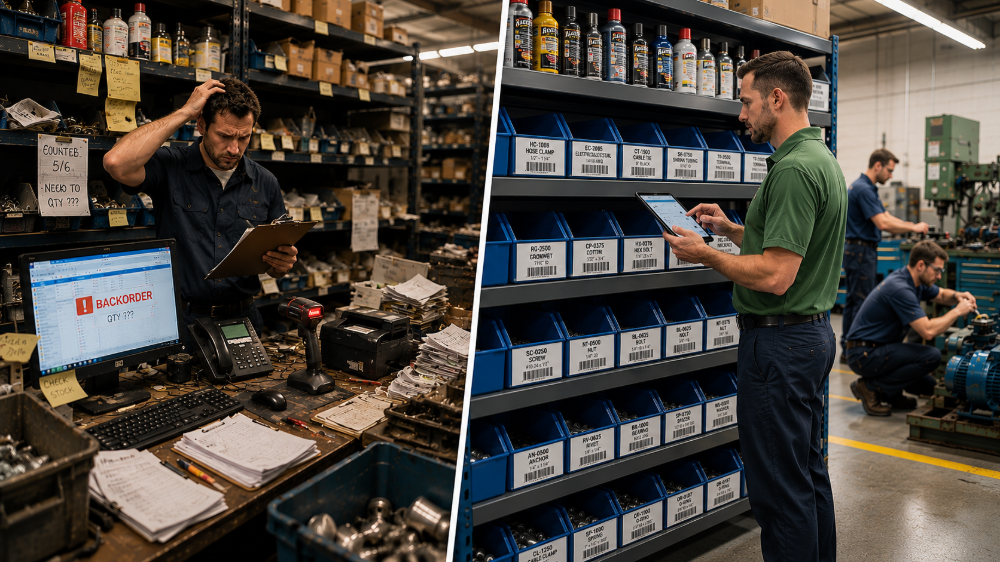
Managing inventory requires more time than many businesses realize.
Employees often spend hours:
- Counting bins and shelves
- Identifying products that need to be reordered
- Creating purchase orders
- Following up on deliveries
- Searching for missing inventory
- Chasing backorders
These routine tasks pull technicians, supervisors, and purchasing personnel away from more valuable work.
Vendor Managed Inventory shifts much of this responsibility to your supplier. Through scheduled inventory reviews and planned replenishment, your team spends less time managing inventory and more time maintaining equipment, serving customers, or completing projects.
Improve Cash Flow by Reducing Excess Inventory
Buying too much inventory can be just as costly as not having enough.
Excess stock ties up capital, takes up valuable storage space, and increases the likelihood of products becoming obsolete before they're ever used. Over time, these hidden costs can have a significant impact on your operating budget.
A Vendor Managed Inventory program helps maintain inventory levels based on actual product usage rather than estimates or "just in case" ordering. By establishing agreed-upon minimum and maximum quantities, businesses can carry enough inventory to support operations without investing in unnecessary stock.
The result is better cash flow, lower carrying costs, and inventory that better reflects your day-to-day operational needs.

Gain Better Visibility into Inventory Usage
Many businesses know what they purchase, but not necessarily what they use.
Without clear visibility into inventory consumption, it's difficult to identify purchasing trends, adjust inventory levels, or recognize products that rarely leave the shelf.
Vendor Managed Inventory provides greater insight into your inventory by helping you understand:
- Which products are used most frequently
- Which items move slowly
- Where inventory is increasing or decreasing
- Which products may no longer need to be stocked
- Opportunities to standardize commonly used items
This visibility allows businesses to make more informed purchasing decisions while continuously improving inventory efficiency over time.
Increase Productivity Across Your Operation
Every minute spent looking for parts, counting inventory, or placing orders is time that isn't spent performing maintenance or completing customer work.
When technicians have immediate access to the supplies they need, work moves more efficiently. Repairs are completed faster, downtime is reduced, and employees can stay focused on the tasks that create value for the business.
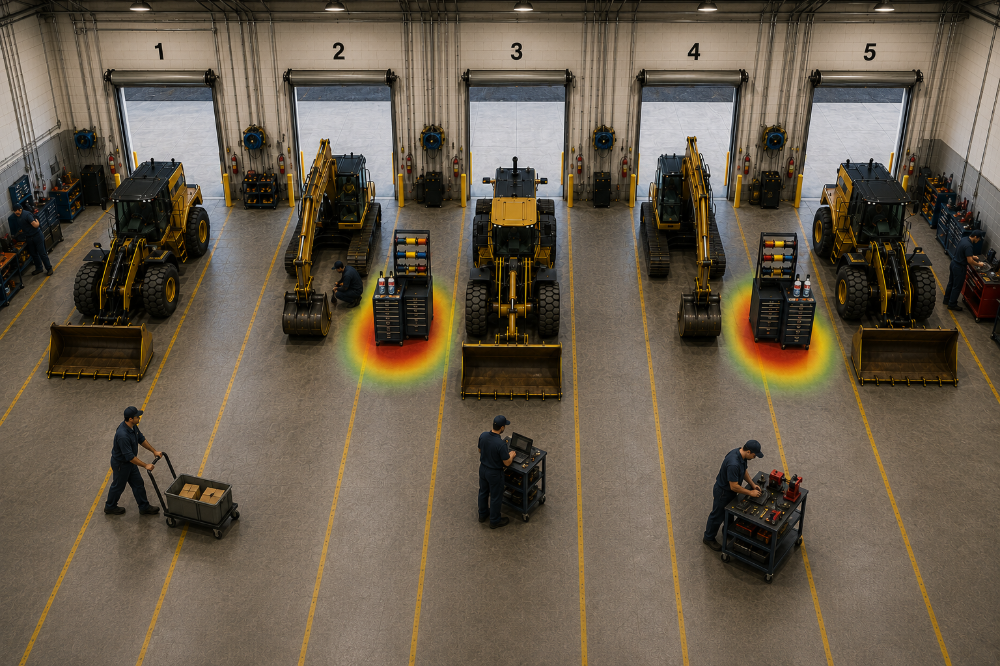
Instead of searching multiple storage locations or discovering missing inventory halfway through a repair, technicians can trust that commonly used MRO products are available when they need them.
Over time, these small improvements in efficiency can add up to significant productivity gains across an entire operation.
Build a Stronger Supplier Partnership
Vendor Managed Inventory changes the relationship between a business and its supplier.
Instead of simply placing orders when products run low, businesses work alongside a supplier that actively helps manage inventory, monitor usage, and identify opportunities for improvement.
A trusted VMI partner can help:
|  |
This collaborative approach creates ongoing communication and helps ensure your inventory strategy evolves as your business changes.
Rather than acting solely as a distributor, your supplier becomes an extension of your team, working to improve efficiency, reduce waste, and keep your operation supplied with the products needed to stay productive.
Common Misconceptions About Vendor Managed Inventory
Vendor Managed Inventory (VMI) is a proven inventory management strategy, but there are still several misconceptions that can prevent businesses from exploring its benefits. Here are some of the most common concerns—and the reality behind them.
"I'll Lose Control of My Inventory." A common misconception is that implementing VMI means giving your supplier complete control over your inventory. In reality, your business remains in control. You work with your supplier to determine which products are managed, establish minimum and maximum inventory levels, and define the replenishment schedule. The supplier simply helps execute the plan and provides recommendations based on inventory usage.
| "It's Only for Large Companies." While large manufacturers often use Vendor Managed Inventory, businesses of all sizes can benefit from it. Fleet maintenance shops, municipalities, contractors, and repair facilities all rely on critical MRO supplies to keep operations running. VMI can be scaled to fit the size and needs of nearly any operation. |
"It Limits Flexibility." Some businesses worry that inventory levels become fixed once a VMI program is established. Inventory requirements change over time, and a good VMI program adapts with them. As demand shifts due to seasonal workloads, new projects, or changing product usage, inventory levels can be adjusted to match your current needs. | "Vendor Managed Inventory Will Cost More." Although it may seem like an added expense, VMI often helps reduce overall inventory costs. By preventing emergency purchases, minimizing excess inventory, reducing administrative labor, and avoiding downtime caused by stockouts, many businesses realize significant long-term savings. |
The bottom line: Vendor Managed Inventory isn't about giving up control—it's about gaining a smarter, more proactive approach to inventory management that helps keep your operation running efficiently.
Signs Your Shop is Ready For VMI
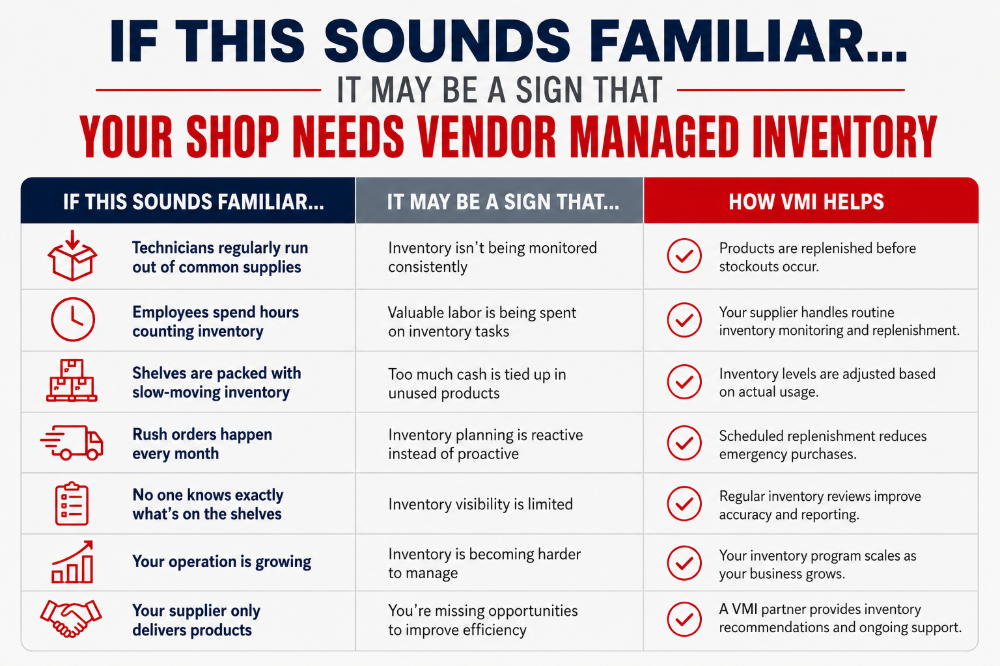
Bottom Line: If you checked two or more of these boxes, it may be time to explore a Vendor Managed Inventory program.
Why Choose Ram Products' VMI Service
Ram Products partners with customers to simplify inventory management through tailored Vendor Managed Inventory solutions. Rather than offering a one-size-fits-all approach, the program is designed around each customer's inventory usage, operational needs, and replenishment schedule.
Depending on your operation, Ram Products can:
|  |
Whether you manage a fleet maintenance facility, manufacturing operation, municipality, or service shop, Ram Products works alongside your team to help keep critical MRO supplies available while reducing the time spent managing inventory, all at no cost to you.
Vendor Managed Inventory isn't simply about keeping shelves stocked—it's about improving efficiency, reducing downtime, and giving maintenance teams more time to focus on the work that keeps operations running. By partnering with a trusted supplier to manage inventory, organizations can reduce stockouts, improve visibility, and streamline purchasing.
If you're looking for a smarter way to manage MRO inventory, Ram Products' Vendor Managed Inventory service can help you build a program tailored to your operation.
Ready to simplify your inventory management?
Explore Ram Products' Vendor Managed Inventory service to learn how a customized VMI program can help your operation reduce downtime, improve inventory visibility, and keep critical supplies on hand.