
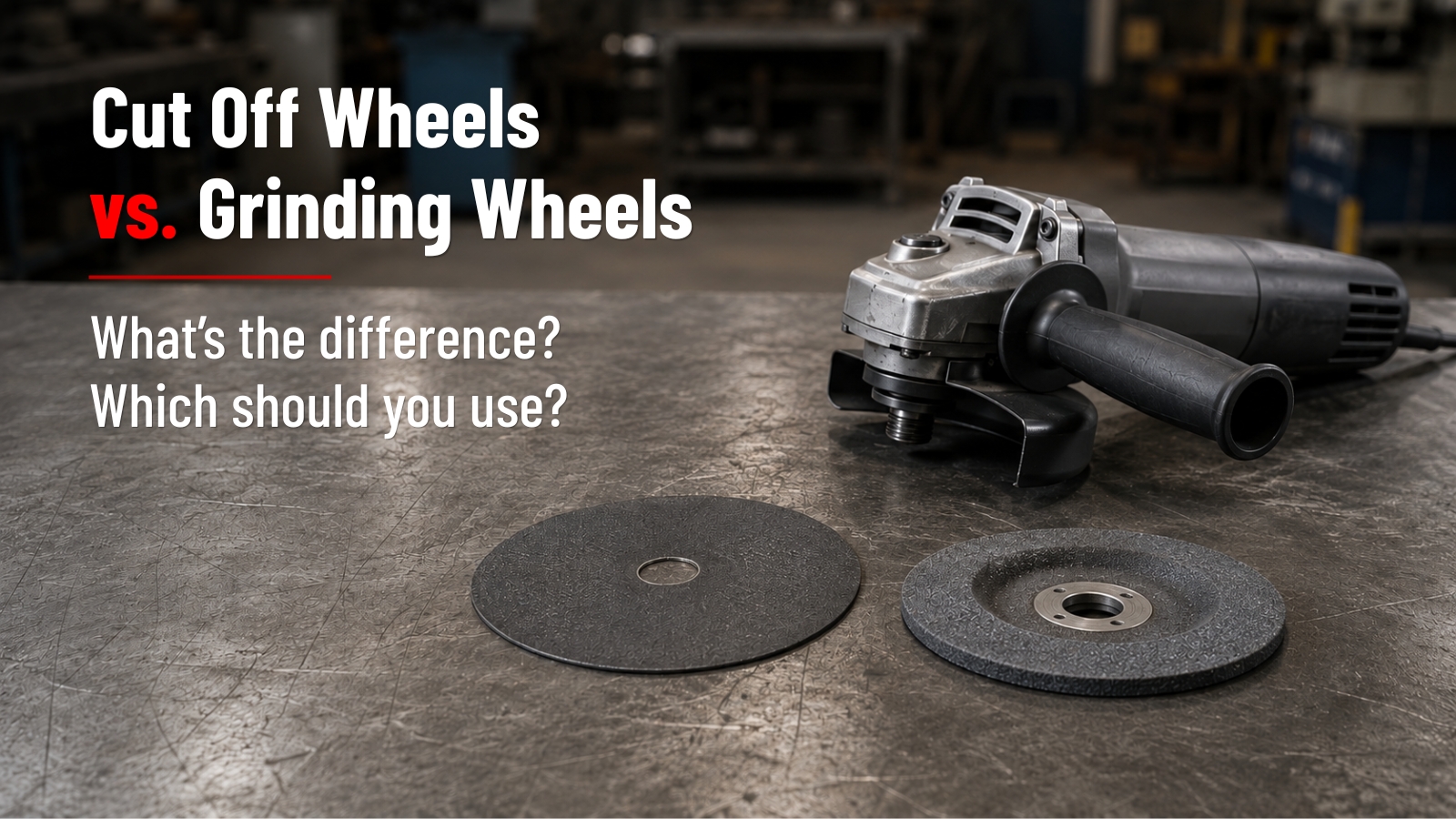
Cut off wheels and grinding wheels are designed for different tasks. A cut off wheel separates material using its outer edge, or periphery. A grinding wheel removes or shapes material using the grinding surface designated for that wheel. Standard cutting-only and grinding-only wheels are not interchangeable.
That distinction is especially important in welding and fabrication, where one job may involve cutting material, removing a weld, shaping an edge, or preparing a bevel. Start with the task, then verify the wheel’s markings, dimensions, arbor, workpiece compatibility, maximum operating speed, tool compatibility, and required guard.
Cut Off Wheels vs. Grinding Wheels at a Glance
Selection Factor | Cut Off Wheel | Grinding Wheel |
Primary job | Cutting through or separating material | Removing or shaping material |
Intended contact surface | The outer edge, also called the periphery | The grinding surface designated for that wheel |
Typical profile | Thin by design | Conventional stock-removal wheels are typically thicker |
Common applications | Cutting bolts, rod, tubing, sheet, or plate | Stock removal, weld grinding, shaping, edge preparation, and beveling |
Important limitation | A cutting-only wheel shoud not be used for side grinding | A grinding-only wheel should not be used for cutting |
Marked exception | Some combination wheels permit cutting and light grinding | Follow the exact operations marked on the wheel |
Physical differences can help distinguish the categories, but appearance and thickness alone do not determine how a wheel may be used. Different wheels can have similar dimensions, and specially marked combination wheels may permit more than one operation. The wheel markings and manufacturer instructions remain the deciding sources. (Cutting-versus-grinding guidance; wheel-label and safety-icon guidance)
What Is a Cut Off Wheel Used For?
A standard cut off wheel is designed to cut through or separate material using its periphery—the narrow outer edge of the wheel. It is not designed to remove material by pressing its flat side against the workpiece. (Cutting-versus-grinding guidance)
Common Cut Off Wheel Applications
In welding and fabrication, common cutting operations can include:
- Cutting through bolts or threaded rod
- Separating sections of rod
- Cutting tubing to length
- Making cuts in sheet material
- Cutting sections of plate
These examples identify the type of operation, not the exact wheel required. The selected wheel must still be approved for the workpiece material and compatible with the tool being used.
Ram’s Cut Off Wheels category includes products with different diameters, thicknesses, arbor configurations, abrasive materials, maximum operating speeds, and wheel types. Those specifications must be evaluated for the individual application.
What Is a Grinding Wheel Used For?
A grinding wheel removes material using the grinding surface designated for that wheel. Instead of passing through a workpiece to separate it, the wheel is used for material-removal and shaping operations.
Common Grinding Wheel Applications
Depending on the specific wheel, common welding and fabrication operations include:
- Removing or leveling weld material
- Removing excess stock
- Shaping a workpiece
- Preparing or grinding an edge
- Producing a bevel
Ram’s Grinding Wheels category includes conventional wheels intended for stock removal and specific wheels described for edge and bevel grinding. Not every grinding wheel is suitable for every job, so the individual wheel markings and instructions still control its approved use.
Different grinding-wheel configurations may also require different working orientations. Do not apply one operating angle or technique to every wheel. Follow the instructions for the specific wheel and tool. (Wheel-label and proper-use guidance)
Why Using the Wrong Wheel Matters
Standard cutting-only and grinding-only wheels are not interchangeable.
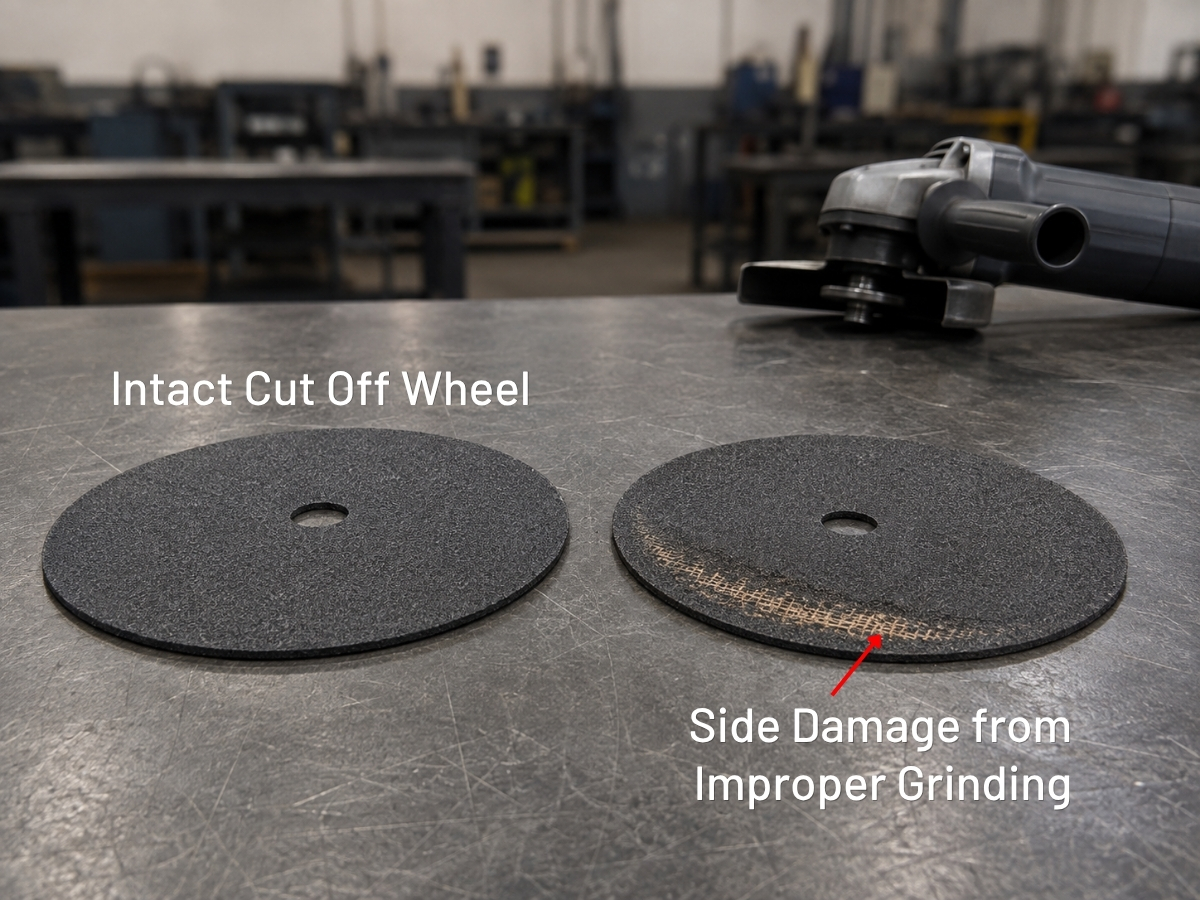
| A cutting-only wheel is designed to cut on its outer edge - not grind on its flat side. |
A thin cutting-only wheel does not have adequate lateral strength for side grinding. Lateral strength refers to the wheel’s ability to withstand force applied from the side. Pressing the flat face of a standard cut off wheel against the workpiece can damage its fiberglass reinforcement, reduce its strength, and lead to wheel breakage or injury. (Cutting-versus-grinding guidance)
Grinding-only wheels have restrictions as well. If a wheel is marked “No cutting” or “Side grinding only,” it should not be pushed through material as if it were a cut off wheel. Similarly, a wheel marked “No side grinding” or “Cutting only” should be used only for its intended cutting operation. (Wheel-label and safety-icon guidance)
The practical rule is simple: use the wheel only for the operations and contact surfaces identified by its markings and manufacturer instructions.
Combination Wheels Are a Marked Exception
Certain wheels are specifically designed to perform both cutting and light grinding. Ram currently lists wheels carrying that designation within its wheel categories. (Ram Products Cut Off Wheels; Ram Products Grinding Wheels)
That marking is what makes the wheel an exception. The availability of combination wheels does not mean ordinary cutting-only and grinding-only wheels can be used interchangeably.
With a combination wheel, users must still follow the operations, limitations, material compatibility, tool requirements, and safety instructions provided for that specific wheel.
How to Choose Between a Cut Off Wheel and a Grinding Wheel
The selection process should begin with the work - not the wheel's color, thickness, or general appearance.
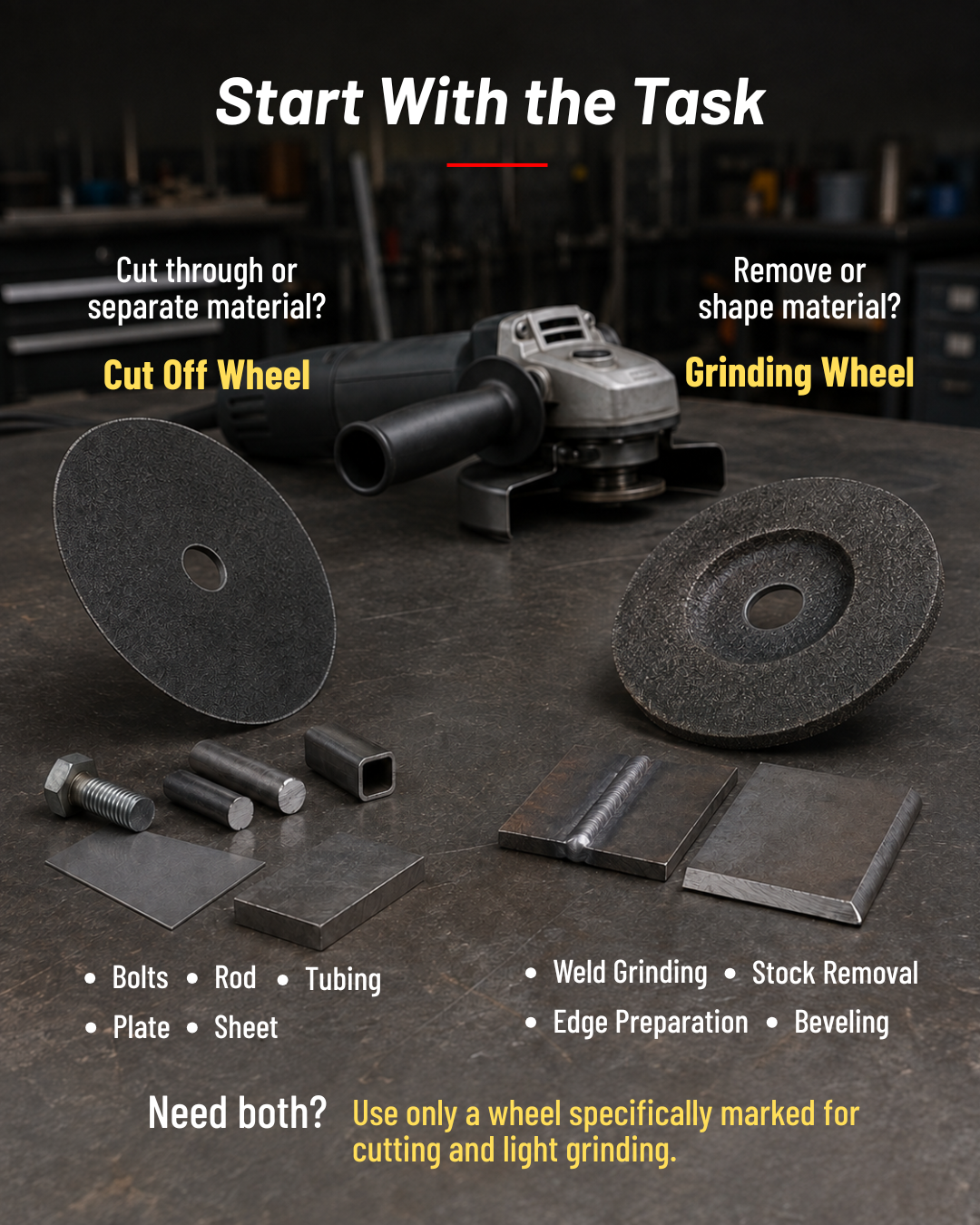
| Identify the operation first, then verify the wheel, workpiece, and tool specifications. |
1. Identify the Operation
Ask what needs to happen to the workpiece:
- To cut through or separate material, begin with the cut off wheel category.
- To remove material, grind a weld, shape a surface, prepare an edge, or produce a bevel, begin with the grinding wheel category.
- To perform both cutting and light grinding, select only a wheel specifically marked for both operations.
This identifies the appropriate category. It does not complete the selection.
2. Read the Wheel Markings
Confirm whether the wheel is marked for cutting, grinding, or a combination of operations. Review its restrictions and safety icons before use.
Do not rely on the wheel type number alone. Ram’s current product categories include Type 27 configurations among both Cut Off Wheels and Grinding Wheels. The full wheel markings and product instructions are therefore more informative than the type number by itself.
3. Verify Workpiece Compatibility
Check that the wheel is approved for the material being cut or ground. Material compatibility should come from the individual wheel’s markings, product documentation, or manufacturer instructions—not assumptions based on its color, thickness, or abrasive grain.
4. Match the Wheel to the Tool
Verify the following before mounting the wheel:
- Approved operation
- Wheel type
- Diameter
- Thickness
- Arbor size
- Workpiece compatibility
- Maximum operating speed
- Tool compatibility
- Required guard
The arbor hole is the wheel’s center opening that fits over or connects to the tool spindle. Confirm that the wheel is designed for the tool and that it fits the spindle as intended. Federal portable abrasive-wheel requirements state that grinding wheels must fit freely on the spindle. (29 CFR 1910.243)
The wheel’s maximum operating speed must meet or exceed the tool’s maximum operating speed. Before mounting, compare the marked wheel rating with the tool or machine rating. (29 CFR 1910.243; angle-grinder safety guidance)
Physical fit alone does not establish compatibility. Use only a wheel designed for the selected handheld angle grinder or guarded cut-off tool, and follow the wheel and tool manufacturers’ instructions.
5. Verify the Guard and Tool Controls
The wheel must be used with the guard specified for the wheel and tool combination. For right-angle and vertical portable grinders, federal requirements state that the guard must be positioned between the operator and the wheel during use. (29 CFR 1910.243)
For a handheld angle grinder, the side handle should also be installed and used. Manufacturer guidance identifies the guard and side handle as important parts of maintaining protection and control during operation. (Angle-grinder safety guidance)
Do not modify a tool or guard to accept a wheel for which the equipment was not designed.
A Brief Pre-Use Safety Check
Wheel selection is only one part of abrasive-wheel safety. Before beginning work:
- Inspect the wheel for visible damage before mounting it, and do not use a damaged wheel.
- Confirm that the wheel is approved for the operation and workpiece.
- Compare the wheel's maximum operating speed with the tool's maximum operating speed.
- Verify the wheel dimensions, arbor, tool, and guard compatibility.
- Make sure the required guard is installed; for an angle grinder, install and use the side handle.
- Wear the personal protective equipment required for the task and workplace.
- Follow the wheel markings, tool instructions, manufacturer guidance, workplace procedures, and applicable training.
Federal requirements address inspection, spindle-speed compatibility, arbor fit, and guarding for portable abrasive-wheel tools. Manufacturer guidance provides additional instructions for specific wheels and tools. (29 CFR 1910.243; wheel-label and safety-icon guidance)
This overview does not replace manufacturer instructions, workplace training, or the safety requirements that apply to a specific operation.
Choose the Wheel for the Work
Use a cut off wheel when the task requires cutting through or separating material. Use a grinding wheel when the task requires removing, shaping, or preparing material. Use a combination wheel for more than one operation only when its markings specifically permit those uses.
Once the task is identified, verify the wheel’s markings, workpiece compatibility, dimensions, arbor, maximum operating speed, tool, and guard before beginning work.
Explore Ram Products’ selection of cut off wheels and grinding wheels.